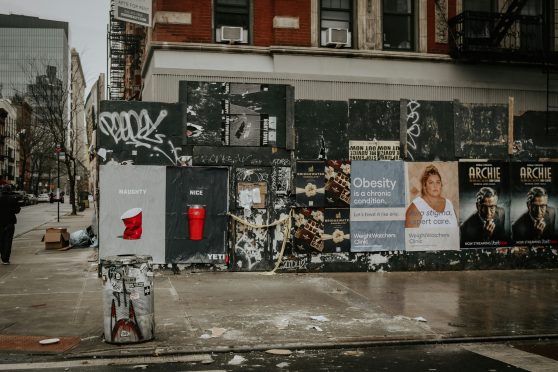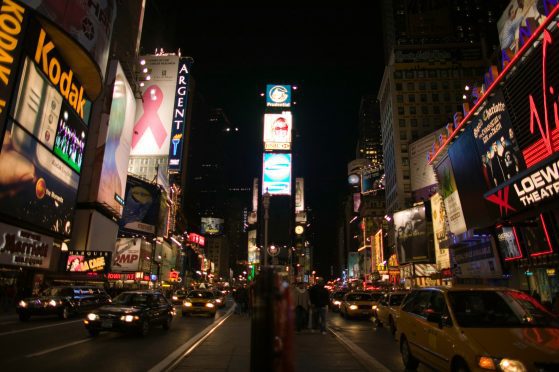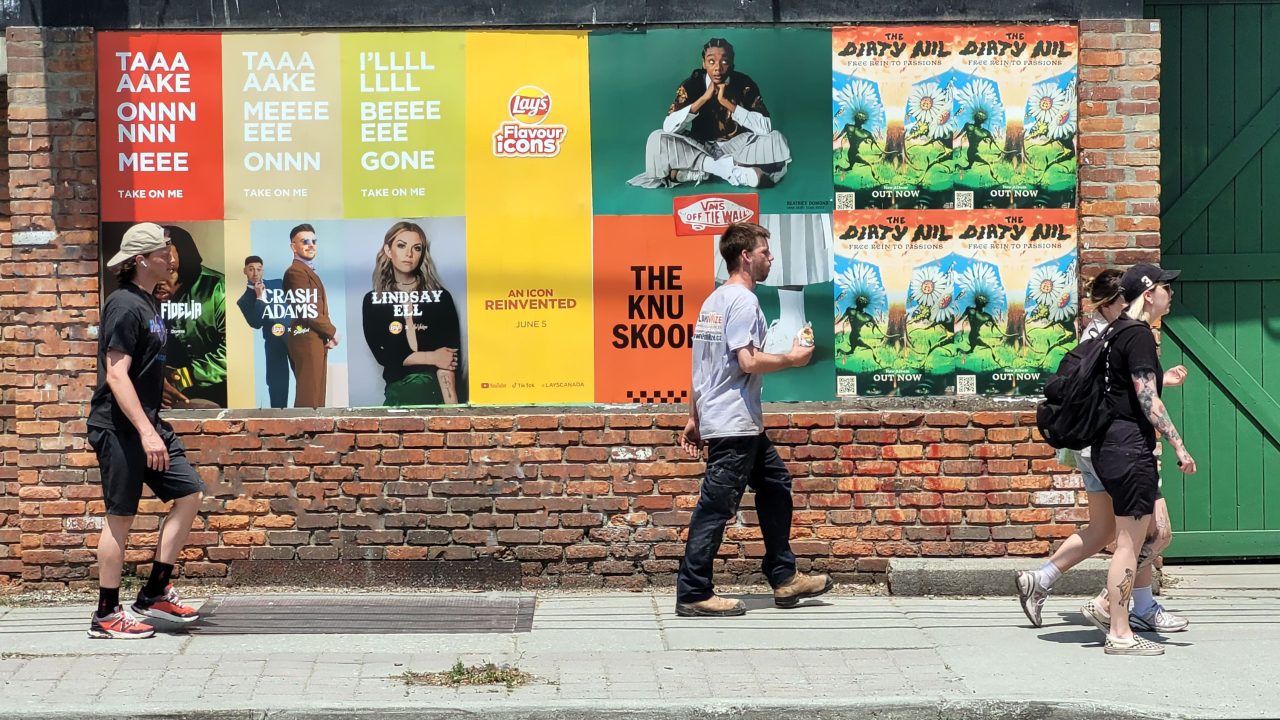
Most street campaigns are decided long before the first poster goes up. By the time creative reaches the street, three choices have already shaped how it will perform: the format, the location, and the timing. Get those right and a simple message can own a neighborhood. Get them wrong and even strong creative can end up in front of the wrong people at the wrong moment.
At Grassroots Advertising, we have planned street advertising campaigns for more than 40 years across Canada, the United States and Europe. The campaigns that perform best are the ones planned around how the audience actually moves through the city.
This guide walks through how we approach each of those three decisions.
Start With the Job the Campaign Has to Do
Before choosing a format, define what the campaign needs to accomplish. Street media can do several different jobs, and each one points toward a different plan.
Most campaigns fall into one of these goals:
- Build recognition: make a name, image or date feel familiar
- Create launch momentum: make a product, event or opening feel present before it arrives
- Drive a direct response: send people to tickets, a store, a website or a QR code
- Create an experience: give people something to try, join, photograph or share
- Reach people near the point of purchase: remind shoppers close to where they buy
A campaign can do more than one of these, but one should lead. That lead goal decides which format carries most of the budget.
If you are still deciding whether street media belongs in your plan at all, our post on how street advertising helps improve business covers that question.
How to Choose the Right Street Advertising Format
Each format reaches people in a different way. The right choice depends on how much attention you need, how long people will be near the message, and what you want them to do next.
Wildposting® for Repetition and Neighborhood Presence
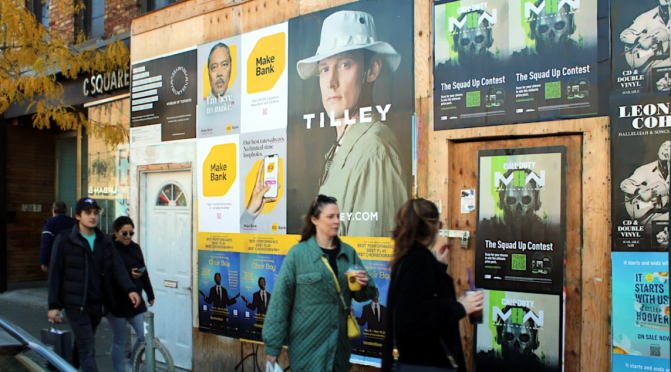
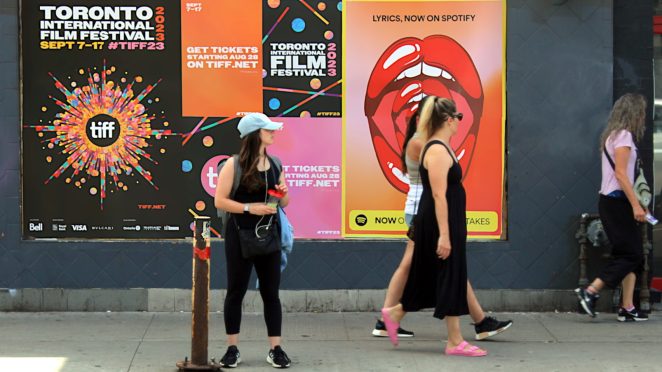
Our Wildposting® service places poster creative across high-traffic urban environments. It is built for repetition. People pass the same message on the way to work, at lunch and on the way home.
The format you choose inside Wildposting® changes the effect:
- Singles: standard 24″ x 36″ posters repeated in blocks or checker-boarded with different creatives
- Mini-Monsters: four posters combined into one 48″ x 72″ portrait image
- Monsters: ten poster placements combined into one 10′ x 6′ image
- Dominations: posters combined across 40 feet to create a single image
- Tear pads: tear-away posters on fences, poles and railings for a physical takeaway
Singles build familiarity. Monsters and Dominations give one image more weight. Tear pads add a simple response.
Street Frames for Point-of-Purchase Reach
Street Frames are 24″ x 36″ framed posters on the exteriors of variety, retail and convenience stores. With more than 1,200 frames in our inventory in Toronto, Montreal, Vancouver and Calgary, they reach people close to where they shop.
A Smart Poster option pairs frames with QR code and NFC capabilities, which is useful when the campaign needs a measurable next step.
Mobile Vehicle Advertising for Timing and Flexibility
Mobile vehicle advertising puts the message on wheels. Options include mobile billboard trucks, digital billboard trucks, mobile display trucks and food trucks.
Trucks are the most time-flexible street format. They can be deployed to specific dates and times, positioned near events, and routed into areas where conventional outdoor advertising has been zoned out. Backlit displays keep the message visible after dark.
Projection Advertising for After-Dark Impact
Projection advertising projects an image or video onto buildings at night, at sizes from 15 to 100 feet. It can include static slides, video and interactive elements such as SMS triggers, gamification, social media tie-ins and 3D mapping.
Projections work well for surprise and scale. Locations depend on local ordinances, and we recommend keeping content to a maximum of 5 minutes so the loop stays tight.
Street Teams for Human Interaction
Street teams bring people into the campaign. Teams can sample products, run demonstrations, hand out collateral or wear branded backpack billboards and costumes.
When the goal is trial or conversation, a person usually does what a poster cannot.
Other Street-Level Formats
Some campaigns need a more unexpected touch. Chalk and stencil art, street washing, murals and Cling-Alls can add surprise to a specific location or support a larger campaign.
Match the Format to the Goal
Use this table as a starting point when you plan the media mix.
| Campaign goal | Formats to consider |
|---|---|
| Build recognition | Wildposting® singles, repeated across a neighborhood |
| Make a bold launch statement | Monsters, Dominations, projections |
| Drive a direct response | Tear pads, Smart Poster frames with QR or NFC |
| Create an experience | Street teams, projections, mobile display trucks |
| Reach shoppers near purchase | Street Frames on retail and convenience stores |
| Hit a specific date or event | Mobile trucks, projections, street teams |
How to Choose the Right Location
The best location is not the one with the most people. It is the one with the right people, in the right mindset, doing something the campaign can fit into.
When we plan locations, we look at:
- Audience match: Does this area attract the people the brand wants to reach?
- Mindset: Are people commuting, shopping, going out or attending an event?
- Pace: Will they walk past in seconds, or wait, queue or linger?
- Repetition: Will the same people pass the message more than once?
- Relevance: Does the neighborhood add meaning to the creative?
- Local rules: What does the city allow for this format?
Pace changes the creative. A poster on a busy commuter route gets a glance, so it needs one clear image and a short line. A frame outside a convenience store or a projection near a nightlife strip may get longer attention.
Relevance also matters. A campus area, an arts district, a stadium route or a shopping street can each strengthen a message when the audience and the neighborhood fit together.
Sometimes a focused neighborhood beats a citywide plan. Concentrating the campaign in the places where your audience already spends time builds more repetition than spreading the same budget thinly across a city.
How to Plan the Timing
Timing covers three questions: when the campaign starts relative to the launch, what time of day each format works best, and how the formats are sequenced.
Start Before the Moment You Are Promoting
For launches, events and openings, the street needs to feel busy with the message before the date arrives. Posters and frames that go up ahead of time build recognition, so the launch itself feels familiar rather than new.
Work backwards from the launch date and build in time for creative approval, printing and installation.
Match Each Format to the Time of Day
Different formats peak at different hours:
- Wildposting® and Street Frames stay in place and work across the whole day
- Projections run after dark
- Street teams can be scheduled on any day and at any time, based on when your audience is out
- Mobile trucks can be timed to specific dates, events and routes, and backlit displays extend visibility into the evening
Sequence the Formats
The strongest campaigns often layer formats in stages. Posters build recognition first. A projection or truck creates a peak moment around the launch or event. Street teams then turn attention into trial or conversation.
Timing can also make creative feel live. During the NBA Finals, our Tangerine campaign projected live Raptors scores across Toronto, turning a real-time moment into part of the message.
Keep the Creative Built for the Street
Even with the right format, location and timing, the creative has to work in a few seconds.
We recommend:
- One clear image or idea per placement
- A short line people can read while walking
- A single next step, such as a URL or QR code
- Consistent branding across every format in the campaign
- Designs that still read from across the street
A family of related designs can tell a bigger story, as long as each one works on its own.
Street Advertising Campaign Planning Checklist
| Planning step | Question to answer |
|---|---|
| Goal | What is the one job this campaign must do? |
| Audience | Who needs to see it, and where do they spend time? |
| Format | Which format matches the goal and the pace of the location? |
| Location | Which neighborhoods give the right audience and repetition? |
| Rules | What does each city allow for this format? |
| Timing | When does it start, and what time of day does each format peak? |
| Sequencing | How do the formats build on each other? |
| Creative | Can someone understand it in a few seconds? |
| Next step | What should people do after they see it? |
Plan Your Street Advertising Campaign With Grassroots Advertising
At Grassroots Advertising, we have spent more than 40 years at street level. We run campaigns in Toronto, Montreal, Vancouver, Calgary, Edmonton and Ottawa, in New York, Chicago, Los Angeles, Miami and Seattle, and in cities across Europe including London, Paris, Berlin, Amsterdam, Barcelona and Rome.
We can help you choose the format that fits your goal, the neighborhoods where your audience already spends time, and the timing that puts your message in front of them at the right moment.
Tell us what you are launching and who you need to reach, and we will build a street plan around it.